“I don’t watch Nollywood” was a subtle brag amongst the Nigerian Nollywood audience, said with an air of superiority. It was understandable a decade ago when the industry was still nursing teething aches— the special effects were abysmal, storylines flew off the rails, and investors never glanced at it. Audiences often mocked its melodramatic portrayals of people and stories. The shift in recent years, drawing investors in with slightly improved special effects and plotlines, could be attributed to the Nollywood audience feedback, often passed with sarcasm.
Fast forward to the 2020s, “I don’t watch Nollywood” is still a sentence that frequents the lips of Nigerians, but this time, the brag is amiss. It is coloured by sombreness; three decades into Nollywood’s existence and it is being retrograded into its crawling years; puzzling plots, sceptical investors. The difference being bigger budgets, glamorous gowns, and compensated crew. The industry carries the problems that plague a startup, but Nollywood is anything but a startup.
Nigerian filmmakers bear the weight of the blame for the industry’s state. However, it is important to note that audiences possess power; they have the ability to shape industries. Franchises are born out of audiences’ admiration, filmmakers rely on audiences for returns on their investments. If so, has the Nollywood audience played their part in Nollywood’s current climate?
Nollywood’s evolution meant more media—publications, podcasts, critics— covering its unfolding. Popular Nollywood publications like What Kept Me Up tend to critically analyse movies, highlighting their good parts and the areas they fail, yet they have caught smoke from fans for tendering honest reviews. This led the publication to start a campaign in 2021 tagged #InPraiseOfCriticism to highlight the importance of critique culture in the movie industry. But fans have been averse to criticism, often calling warranted critique an attack.
A second example is the case of Iroko Critic, the brand tagged to the Nollywood Film Club. It is by far Nollywood’s most well-known film club, hosted by a couple referred to as Mr and Mrs C. The club gathers hundreds of Nolly fans on Twitter Spaces every Sunday to discuss movies or industry shifts. It works just like usual book clubs—driven by love for Nollywood and discussions.
Attendees speak about what they enjoyed watching the movie of the week, and their gripes with it. A Twitter user once referred to the group as a troll, saying, “Iroko critic, more like iroko troll.” Another one insisted the club dislikes certain filmmakers: “I mean, we can’t all create films, but when people get on the space that happens on Sundays, it’s almost like they have a personal vendetta against the filmmakers.”
The audience’s rebuttal of criticism in any form is further backed by stan culture. The coinage could be traced to Eminem’s song Stan, which tells the story of an obsessive fan whose obsession takes a dangerous turn. Today, it is used to describe “the behaviour or beliefs of an extreme fandom whose members fervently and blindly support their chosen celebrity or team, often demonising or reviling anyone or anything opposed to, or not sufficiently devoted to, the object of their worship.”
Most Nollywood audiences already view critique as an ambush; bring stan culture into the equation and it becomes even more disastrous.
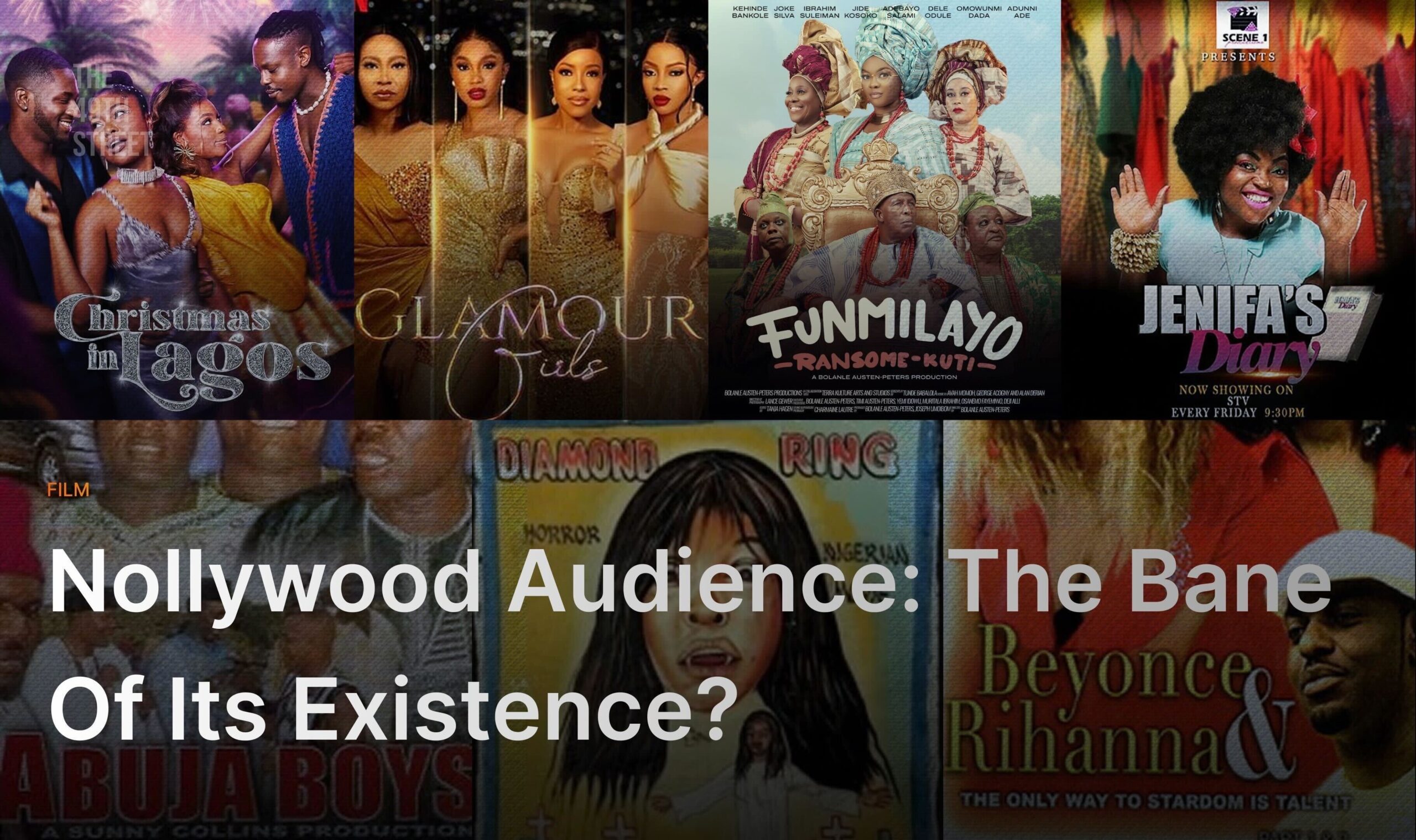
Stan culture does not hold its idols to higher standards, often content with the barest minimum. This summarises the vast majority of Nollywood’s audience. They do not ask for more, are inclined to applaud mediocrity, and provide excuses for faults. In the case of Jade Osiberu’s Christmas in Lagos, many praised the movie for its beautiful costumes but had a problem with the plot. The audience’s retort was based on the movie positioned as “feel good” and romcoms not being a “serious genre”, both perforated justifications for the film’s flaws.
The Nollywood audience feedback is of utmost importance to the movie industry. With unbiased reviews, blind spots become obvious to filmmakers. As a creative, there is a tendency to become too attached to your work; you fail to see its pitfalls, and audiences are able to point them out. This kind of synergy betters the craft of the Nigerian filmmakers, thereby affecting the quality of the industry and enriching the experience of audiences.
Audiences also offer diverse perspectives to help filmmakers refine their artistic visions. They can also motivate filmmakers to try new ideas, tweak existing stories and dive into specific areas of film production that need an upgrade.
Although there are harsh and ridiculous commentaries, filmmakers do themselves a great service by skimming through and picking comments that apply and fit. They can only find these thoughts if fans of the industry engage films from a sincere point of view, void of an infantilisation of the industry and a visually impaired adoration for filmmakers. The good news is that there is a sect of Nollywood audiences doing just that, but they remain in the minority.
Filmmakers owe a debt to the audience when they pay to watch their movies and that debt is cleared only when they are satisfied. Consumer satisfaction is a top priority in any business model. Prototypes are improved via users’ feedback, and innovations gratify purchasers. It is a beneficial cycle. A complementary relationship between the Nollywood audience and Nigerian filmmakers, rooted in truthfulness, will create a thriving Nollywood where both audiences and filmmakers are satiated.